
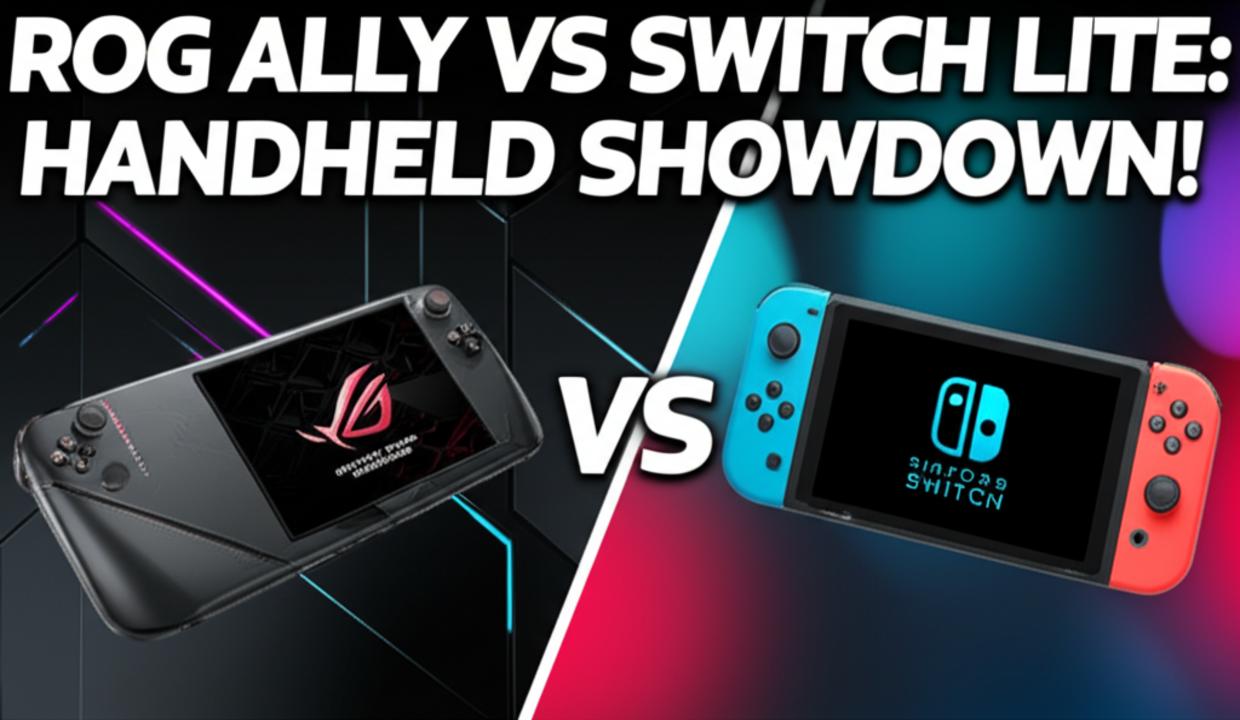
Choosing the ultimate gaming handheld can feel like navigating a maze, especially when faced with two titans like the Asus ROG Ally and the Nintendo Switch Lite. Both offer fantastic portable gaming experiences, but they cater to very different types of gamers and priorities. This detailed comparison will cut through the noise, helping you decide which device truly earns the title of “best portable gaming” for your needs in 2025.
Are you a performance enthusiast craving high-fidelity PC games on the go, or do you prefer a lightweight, streamlined device focused on exclusive titles? We’ll break down everything from raw power to game libraries, design, and price, ensuring you make an informed choice for your next gaming adventure.
Main Highlights: Asus ROG Ally vs Nintendo Switch Lite: Gaming Device Comparison
The core difference between the Asus ROG Ally and the Nintendo Switch Lite boils down to their fundamental design philosophies. The ROG Ally is essentially a powerful, compact PC in handheld form, built for running demanding modern titles. In contrast, the Switch Lite is a dedicated gaming console, optimized for Nintendo’s unique ecosystem and ultimate portability.
Understanding these distinct approaches is crucial for any gamer. Your preference for expansive game libraries versus exclusive content, or raw graphical power versus compact design, will heavily influence which handheld is the right fit for you.
Performance and Key Features
When it comes to raw processing power, the Asus ROG Ally undeniably takes the lead. It boasts an AMD Ryzen Z1 Extreme CPU with 8 cores and 16 threads, coupled with an RDNA 3 GPU. This robust hardware allows it to handle demanding games like The Witcher 3 smoothly at 1080p resolution, delivering a true PC gaming experience in your hands.
The Nintendo Switch Lite, on the other hand, utilizes an NVIDIA custom Tegra processor, which is older technology from 2015. While perfectly capable of running its exclusive library, it often renders games at lower resolutions, such as 540p for games like The Witcher 3, to maintain stable framerates. This difference highlights the ROG Ally‘s focus on high-fidelity visuals and PC game compatibility.
Storage is another significant differentiator. The ROG Ally typically comes with 512GB of internal storage, expandable via USB-C peripherals. This ample space is essential for large PC game installations. The Switch Lite offers a more modest 32GB of internal storage, though it is easily expandable using microSD cards up to 2TB, which is convenient for its smaller game sizes.
For connectivity, the ROG Ally features USB-C port(s) and can even connect to an external GPU for an additional performance boost. This flexibility is a hallmark of its PC gaming platform style. The Switch Lite‘s USB-C port is primarily for charging, with no video output on this model, but it supports wireless LAN, Bluetooth 4.1, and NFC for accessories, as detailed in the Nintendo Switch tech specs.
Design, Interior, and Comfort
When we look at design, the Asus ROG Ally is undeniably bulkier and heavier than its Nintendo counterpart. Its chunkier design is specifically optimized for comfort during longer play sessions, aiming to replicate the feel of holding a traditional PC controller. The fixed controls are full-sized, making them well-suited for PC-like gaming where precision is key.
Conversely, the Nintendo Switch Lite is significantly lighter, weighing approximately 275 grams, and boasts a slimmer profile. This makes it incredibly portable, designed for easy transport and on-the-go gaming. However, its smaller, integrated controls and compact form factor can be less ergonomic for extensive gaming sessions compared to the ROG Ally.
The display sizes also reflect their design philosophies. The ROG Ally typically features a screen of around 7 inches or less, but its powerful GPU ensures higher-quality visuals. The Switch Lite has a 5.5-inch capacitive touchscreen LCD with a 1280×720 resolution, perfect for its intended use as a dedicated handheld device. The choice here comes down to screen real estate and visual fidelity versus ultimate portability and a smaller form factor.
Technology and Safety
The underlying technology in both devices significantly shapes their user experience. The Asus ROG Ally runs a full Windows operating system, offering unparalleled versatility. This means you can install virtually any PC game launcher, browse the web, and even use productivity software, turning it into a truly portable computer. Its advanced hardware, while consuming more power, provides a robust gaming environment for modern AAA titles.
The Nintendo Switch Lite, however, operates on a proprietary system designed specifically for Nintendo’s gaming ecosystem. This streamlined approach offers simplicity, quick boot times, and a highly optimized environment for its exclusive games. While it lacks the versatility of a PC, its dedicated nature means fewer complications and a more consistent, user-friendly experience, as highlighted by expert comparisons from XDA-Developers.
Battery life is also tied to their technological differences. The ROG Ally features a larger battery to support its advanced hardware and longer gaming sessions, but its higher power consumption means it drains faster when playing demanding games. The Switch Lite‘s smaller battery is tailored for its lighter hardware, making it more efficient and generally providing good battery life for its less resource-intensive games. This makes the Switch Lite a great option for more casual, on-the-go play where outlet access might be limited. #GamingTech
What’s New in 2025?
As we move into 2025, the conversation around handheld gaming continues to evolve. While newer devices may emerge, the core strengths and weaknesses of the Asus ROG Ally and Nintendo Switch Lite remain prominent. The ROG Ally continues to push the boundaries of portable PC gaming, constantly adapting to new game releases and software updates that enhance its performance and compatibility.
The Switch Lite, while not seeing significant hardware upgrades, maintains its strong appeal through Nintendo’s consistent release of beloved exclusive titles. Recent discussions and reviews, especially in 2025, continue to emphasize the ROG Ally‘s superior power for non-Nintendo games versus the Switch Lite‘s unmatched portability and exclusive library. The market for handhelds is diverse, and both devices hold unique value propositions depending on what a gamer prioritizes. GamesRadar’s analysis also touches upon the broader handheld landscape and how new models might compare, as seen in their hardware discussions.
Pricing and Variants
Price is often a decisive factor for consumers. The Asus ROG Ally typically carries a higher MSRP compared to the Nintendo Switch Lite. Being a more powerful, PC-centric device, its advanced components contribute to a premium price point. However, due to its niche in the PC gaming market, sales and discounts are quite common, especially during major shopping events.
In contrast, the Nintendo Switch Lite has a consistently lower MSRP and a more stable price due to its broad market appeal and established position as a dedicated gaming console. This makes the Switch Lite a much more accessible entry point into portable gaming, particularly for those on a tighter budget or primarily interested in Nintendo’s exclusive titles. The cost difference reflects the technological capabilities and target audiences of each device.
Pros and Cons
| Pros | Cons |
|---|---|
| Superior performance for demanding AAA PC games. | Higher initial price point. |
| Access to a vast PC game library (Steam, Epic, Xbox Game Pass). | Bulkier and heavier design, less portable. |
| High-quality display and visuals. | Shorter battery life under heavy load. |
| Expandable storage (512GB internal, USB-C peripherals). | No access to Nintendo exclusive games. |
| Full Windows OS offers versatility beyond gaming. | Can run hotter during intensive gaming. |
| Comfortable ergonomics for extended play sessions. | Does not have built-in mouse functionality. |
| Lighter and slimmer design, highly portable. | Lower performance hardware. |
| Lower and more stable MSRP. | Smaller screen (5.5-inch). |
| Access to exclusive Nintendo Switch games. | Limited internal storage (32GB). |
| Excellent battery efficiency for its hardware. | No TV output capabilities. |
| Integrated, simpler controls and user interface. | Less ergonomic for very long gaming sessions. |
Bonus Section
- Competitive Analysis: The Asus ROG Ally and Nintendo Switch Lite occupy distinct niches in the handheld gaming market. The ROG Ally competes more directly with other powerful handheld PCs like the Steam Deck or Lenovo Legion Go, offering a robust platform for PC gaming enthusiasts. Its strength lies in sheer performance and access to a familiar PC game ecosystem. The Switch Lite, conversely, dominates the market for compact, console-like handhelds, leveraging Nintendo’s unique IP and user-friendly experience. It faces less direct competition from high-spec PC handhelds and more from its own family, like the standard Nintendo Switch model, as discussed in detail by XDA-Developers.
- Expert Opinions: According to many tech reviewers and gaming experts, the choice between these two devices boils down to priority. For those who prioritize raw power, the ability to play the latest AAA PC titles, and overall versatility, the ROG Ally is the clear winner. However, for gamers who value ultimate portability, access to Nintendo’s iconic first-party titles, and a simpler, pick-up-and-play experience, the Switch Lite remains an unparalleled choice. The ROG Ally is seen as a portable powerhouse, while the Switch Lite is celebrated for its focused, accessible fun.
FAQ
- Which device is better for playing demanding AAA games?
The Asus ROG Ally is significantly better for demanding AAA games. Its powerful AMD Ryzen Z1 Extreme CPU and RDNA 3 GPU allow it to run titles like The Witcher 3 at higher resolutions and frame rates, offering a true PC gaming experience on the go. - Can I play PC games on the Nintendo Switch Lite?
No, the Nintendo Switch Lite cannot natively play PC games. It runs on a proprietary operating system and is designed exclusively for playing games released for the Nintendo Switch console, which are available digitally via the eShop or physically via game cards. - Which handheld offers better battery life for casual gaming?
For casual, less demanding games, the Nintendo Switch Lite often offers better battery life due to its less power-hungry hardware and optimized software. While the ROG Ally has a larger battery, its advanced components consume more power, especially during intensive gaming. - What’s the main difference in game libraries?
The Asus ROG Ally provides access to a massive library of PC games from platforms like Steam, Epic Games, and Xbox Game Pass, including many AAA titles. The Nintendo Switch Lite is limited to games specifically developed for the Nintendo Switch, including all of Nintendo’s exclusive first-party titles.
Conclusion
In the grand showdown between the Asus ROG Ally and the Nintendo Switch Lite, there isn’t a single “best” device; rather, there’s a best fit for your specific gaming lifestyle. The Asus ROG Ally stands out as the undisputed champion for gamers who demand cutting-edge performance, access to an extensive PC game library, and the flexibility of a full Windows operating system in a portable form. It’s built for those who prioritize graphical fidelity and immersive, console-quality experiences on the go, even if it comes with a higher price tag and increased bulk.
Conversely, the Nintendo Switch Lite shines for players who value ultimate portability, a more affordable entry point, and seamless access to Nintendo’s beloved, exclusive game catalog. It’s the perfect companion for casual gaming, quick pick-up-and-play sessions, and for those who appreciate the simplicity and charm of Nintendo’s unique ecosystem. Your ideal gaming handheld will depend entirely on whether you prioritize raw power and versatility or compact design and exclusive, streamlined entertainment. We hope this comparison helps you make the perfect choice! Explore more articles on gaming technology on our site, or contact us with any questions. You can also learn more About Us.
Watch More in This Video
A recent video titled “ASUS ROG Ally Review and Comparison with Nintendo Switch Lite – Ultimate Handheld Gaming Battle!” (published June 2025) provides a detailed visual comparison, showing gameplay, size difference, and performance benchmarks for both devices. It highlights how the ROG Ally outperforms the Switch Lite in raw power but notes the Switch Lite’s ergonomic advantages and exclusive game library.
Disclaimer: All images and videos are sourced from public platforms like Google and YouTube. If any content belongs to you and you want credit or removal, please inform us via our contact page.