
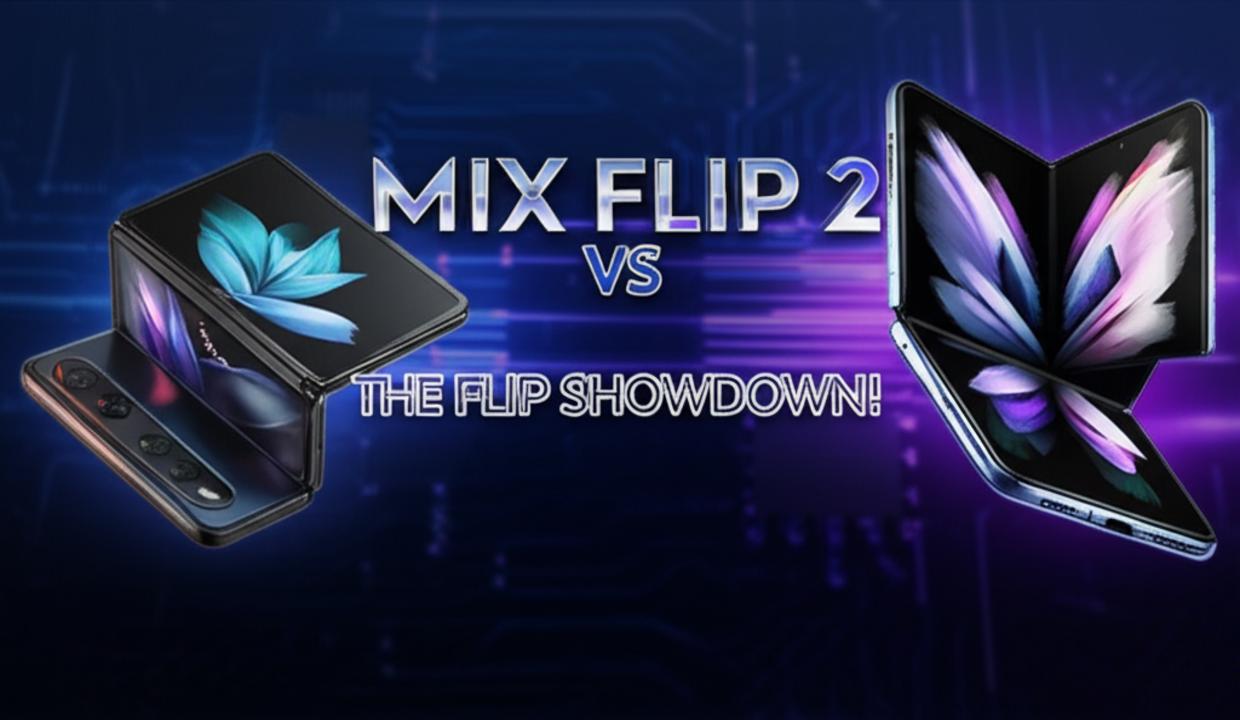
The world of smartphones is constantly evolving, and perhaps no category illustrates this better than the foldable phone segment. These pocketable powerhouses are redefining how we interact with our devices, offering innovative form factors and cutting-edge technology.
Two contenders poised to dominate the market in the coming year are the highly anticipated Xiaomi Mix Flip 2 and the Samsung Galaxy Z Flip 7. Both promise to push boundaries, but which one truly stands out?
This comprehensive article dives deep into a head-to-head foldable phone comparison, pitting the Mix Flip 2 vs Z Flip 7 across all critical aspects. We will explore their displays, cameras, performance, software, battery life, design, and unique features to help you decide which of these new foldable phones is the best fit for your lifestyle. Let’s unfold the future of mobile technology!
Main Highlights: Xiaomi Mix Flip 2 vs Samsung Galaxy Z Flip 7
When comparing the Xiaomi Mix Flip 2 and the Samsung Galaxy Z Flip 7, several key differences immediately catch the eye. Both devices represent the pinnacle of current foldable technology, yet they prioritize different aspects of the user experience.
The Xiaomi Mix Flip 2 aims for a superior visual experience with its higher resolution display and boasts a larger battery for extended usage. It also offers specific water and dust resistance for added durability.
On the other hand, the Samsung Galaxy Z Flip 7 focuses heavily on software innovation, particularly with its advanced Galaxy AI features and enhanced external screen functionality. It also presents a slightly slimmer and lighter design, appealing to those who prioritize sleekness.
Ultimately, the choice between these two exceptional new foldable phones will likely depend on whether you value raw hardware specifications and battery endurance more, or a sophisticated, AI-driven software ecosystem and a super-slim profile.
Display Deep Dive: Visual Excellence Unfolded
The display is arguably the most crucial component of any foldable phone, and both the Xiaomi Mix Flip 2 and Samsung Galaxy Z Flip 7 offer impressive screens. However, there are notable distinctions that can influence your daily viewing experience.
The Xiaomi Mix Flip 2 features a 6.86-inch foldable display. While slightly smaller than its competitor, it compensates with a significantly higher resolution of 2912 x 1224 pixels. This translates to an impressive pixel density of approximately 460 ppi, offering incredibly crisp and detailed visuals.
For users who consume a lot of high-resolution media, read extensive text, or appreciate razor-sharp images, the Mix Flip 2‘s display could be a game-changer. Every pixel matters when you’re looking for ultimate clarity.
In contrast, the Samsung Galaxy Z Flip 7 sports a 6.9-inch foldable display, making it marginally larger. Its resolution stands at 2520 x 1080 pixels, resulting in a pixel density of around 397 ppi. While still excellent, it’s not quite as dense as Xiaomi’s offering.
The larger screen real estate on the Galaxy Z Flip 7 might appeal to those who prefer more expansive viewing, even if it means a slight trade-off in absolute sharpness. Both panels are expected to be vibrant and offer excellent color reproduction, crucial for modern smartphone usage.
Camera Capabilities: Capturing Every Moment
For many, a smartphone’s camera system is a primary decision-making factor, and both the Xiaomi Mix Flip 2 and the Samsung Galaxy Z Flip 7 are equipped to deliver stunning photos and videos. Both devices feature a powerful 50 MP main camera, ensuring high-quality images with excellent detail.
Both main sensors benefit from Optical Image Stabilization (OIS), which is crucial for reducing blur in photos and smoothing out shaky video footage, especially in low-light conditions. They also include dual pixel PDAF, enabling rapid and accurate autofocus.
Where they diverge significantly is in their ultrawide lenses. The Xiaomi Mix Flip 2 boasts a robust 50 MP ultrawide lens. This high-resolution sensor, combined with a 115° field of view and a bright f/1.7 aperture, promises detailed and expansive wide-angle shots, even in challenging lighting.
The Samsung Galaxy Z Flip 7, while still offering an ultrawide option, features a 12 MP ultrawide lens. It compensates slightly with a wider 123° field of view, allowing you to capture more of the scene. Its main camera also features an f/1.8 aperture.
For front-facing cameras, the Galaxy Z Flip 7 includes a 10 MP selfie camera, perfect for video calls and self-portraits. While details for the Xiaomi Mix Flip 2‘s front camera were not explicitly mentioned, it’s likely to offer comparable performance in its class, ensuring you look great on your next video chat or social media post.
Performance Powerhouse: Speed and Efficiency
Under the hood, both of these new foldable phones are designed to deliver top-tier performance, ensuring smooth multitasking, responsive app usage, and capable gaming. The processor and RAM are crucial for handling demanding tasks and sophisticated AI features.
The Samsung Galaxy Z Flip 7 is powered by Samsung’s proprietary Exynos 2500 chip, paired with a generous 12 GB of RAM. This combination is engineered for efficient power management and seamless execution of complex operations, including the integration of advanced Galaxy AI features.
The Exynos 2500 is expected to provide substantial processing power, making the Galaxy Z Flip 7 highly capable for everything from intensive gaming to running multiple applications simultaneously. Its focus on AI capabilities extends to its core performance, optimizing tasks for a more intuitive user experience.
Details regarding the Xiaomi Mix Flip 2‘s chipset were not clearly stated in the latest information. However, it is described as being comparable in specs to flagships, suggesting it will feature a high-end processor from a leading manufacturer, ensuring it can keep pace with any modern mobile task.
Both the Xiaomi Mix Flip 2 and the Samsung Galaxy Z Flip 7 offer users flexible storage options, supporting 256 GB or 512 GB storage variants. This ample storage ensures you have plenty of space for apps, photos, videos, and large files without constantly worrying about running out of room.
Software and AI Innovation: A Smarter Foldable Experience
Beyond raw hardware, the software experience and integrated artificial intelligence features are increasingly defining the user experience of modern smartphones. Here, the Samsung Galaxy Z Flip 7 clearly emphasizes its strengths.
The Samsung Galaxy Z Flip 7 runs on One UI 8, which is based on Android 16. A significant highlight is its deep integration with advanced Galaxy AI. This suite of AI features aims to make interactions more intuitive and personalized, even on the cover screen.
Galaxy AI offers functionalities such as voice search, advanced widget customization, and Gemini Live camera sharing, allowing for innovative ways to share your visual experiences. The introduction of the Now Bar provides real-time notifications directly on the cover screen, enhancing hands-free interactions without needing to unfold the device.
These AI features are designed to create a truly seamless and personalized user journey, leveraging machine learning to anticipate needs and streamline daily tasks. Samsung’s commitment to AI places the Galaxy Z Flip 7 at the forefront of intelligent mobile technology.
For the Xiaomi Mix Flip 2, specific software details were unspecified, but it is likely to run a recent version of Android (e.g., Android 15+) with Xiaomi’s custom MIUI or HyperOS overlay. While Xiaomi also incorporates AI, Samsung’s explicit focus on a comprehensive Galaxy AI ecosystem appears to be a distinctive selling point for the Z Flip 7 in this foldable phone comparison.
Battery and Charging: Powering Your Day
Battery life is a critical consideration for any smartphone user, and especially for compact foldables. Both the Xiaomi Mix Flip 2 and the Samsung Galaxy Z Flip 7 offer substantial batteries, though with different capacities.
The Xiaomi Mix Flip 2 comes equipped with a larger battery, boasting a capacity of 4,780 mAh. This substantial power source suggests that the Mix Flip 2 could offer superior endurance, potentially lasting longer on a single charge for heavy users.
In comparison, the Samsung Galaxy Z Flip 7 features a 4,300 mAh battery. While smaller than Xiaomi’s, this capacity is still robust for a foldable device of its size and is likely optimized for efficient power consumption, especially with the Exynos 2500 chip.
When it comes to charging, both devices are on par. They both support 25W wired charging, allowing for reasonably fast top-ups. Additionally, both the Xiaomi Mix Flip 2 and the Samsung Galaxy Z Flip 7 offer the convenience of wireless charging.
Furthermore, they both support reverse wireless charging. This handy feature allows you to use your foldable phone to wirelessly charge other compatible devices, such as earbuds or smartwatches, making them truly versatile power hubs.
Design and Build: Form, Function, and Durability
The physical design of a foldable phone is as important as its internal specifications, influencing portability, ergonomics, and durability. Both the Xiaomi Mix Flip 2 and the Samsung Galaxy Z Flip 7 showcase distinct approaches to their form factors.
The Samsung Galaxy Z Flip 7 is designed with a strong emphasis on slimness and lightness. When folded, it measures a remarkable 13.7mm thickness, making it incredibly compact and easy to slip into a pocket or small bag. It weighs approximately 188g, contributing to its lightweight feel.
Samsung also prioritizes durability with the Galaxy Z Flip 7, incorporating Gorilla Glass Victus 2 for enhanced scratch and drop resistance, and a sturdy aluminum frame for structural integrity. These materials provide a premium feel and added protection for everyday use.
The Xiaomi Mix Flip 2 is slightly thicker when folded, measuring around 16mm. It also weighs a bit more at approximately 190g. While these differences are minor, they contribute to a slightly more substantial feel in hand compared to the Z Flip 7.
A notable advantage for the Xiaomi Mix Flip 2 is its IP48 rating for dust and water resistance. This certification provides an extra layer of confidence, knowing your device can withstand splashes and dust exposure, which is a crucial aspect for modern smartphone durability.
Unique Selling Points: What Makes Each Stand Out?
Every flagship device aims to carve out its niche, and these two new foldable phones are no exception. Their unique selling points highlight their core philosophies and target different user preferences.
Samsung’s primary emphasis with the Galaxy Z Flip 7 is its extensive software AI integration and the innovative utilization of its FlexWindow (cover screen). The Galaxy AI suite enhances user interaction without the need to unfold the device, making quick tasks and notifications incredibly seamless and smart.
Features like the Now Bar and advanced widget customization on the cover screen redefine how users interact with a foldable phone in its closed state. Samsung aims to create a highly intelligent and convenient user experience that leverages its AI capabilities.
The Xiaomi Mix Flip 2, on the other hand, distinguishes itself with superior raw hardware specifications. It offers a sharper display resolution, providing crisper and more detailed visuals for content consumption and everyday usage. This is a significant draw for users who prioritize screen quality above all else.
Furthermore, the Mix Flip 2 boasts a larger battery capacity, which can translate to longer usage times between charges – a crucial factor for many users. The inclusion of an IP48 rating for water and dust resistance also adds a layer of practical durability, making it more resilient to daily wear and tear.
Pricing and Variants
While specific pricing details for both the Xiaomi Mix Flip 2 and the Samsung Galaxy Z Flip 7 are often subject to regional announcements and market dynamics, it’s expected that both devices will be positioned as premium offerings in the foldable smartphone segment. As new foldable phones, they represent cutting-edge technology and design.
Both models are confirmed to be available in 256 GB and 512 GB storage variants. These options provide ample space for apps, photos, videos, and documents, catering to users with varying storage needs.
The exact price point will play a significant role in the foldable phone comparison. Historically, Xiaomi has sometimes offered competitive pricing, while Samsung’s flagships command premium prices reflecting their extensive R&D and brand ecosystem. Potential buyers should keep an eye on official announcements closer to launch dates for precise figures.
Pros and Cons
| Pros | Cons |
|---|---|
| Xiaomi Mix Flip 2: Superior display resolution (~460 ppi). Larger 4,780 mAh battery. 50 MP ultrawide camera. IP48 water/dust resistance. | Xiaomi Mix Flip 2: Slightly thicker (~16mm) and heavier (190g). Processor details not explicitly stated (though comparable to flagships). Software AI features not as prominently highlighted as Samsung’s. Front camera details not specified. |
| Samsung Galaxy Z Flip 7: Advanced Galaxy AI integration (voice search, Gemini Live, Now Bar). Slimmer (13.7mm) and lighter (188g) design. Exynos 2500 chip with 12 GB RAM. Gorilla Glass Victus 2 protection. 10 MP front camera. | Samsung Galaxy Z Flip 7: Lower display resolution (~397 ppi). Smaller 4,300 mAh battery. 12 MP ultrawide camera (lower resolution than Xiaomi’s). Water/dust resistance not explicitly specified (beyond general durability features like Gorilla Glass). |
Bonus Section
- Competitive Analysis: In the fierce battle of new foldable phones, the Xiaomi Mix Flip 2 positions itself with raw hardware power, particularly its display and battery, appealing to spec-conscious users. The Samsung Galaxy Z Flip 7, however, aims to win over users with its highly intelligent software ecosystem and streamlined design. Samsung’s commitment to Galaxy AI could be a significant differentiator, offering unique user interactions that might not be immediately available on competitor devices. Xiaomi’s added durability with IP48 is also a strong competitive edge in daily usability.
- Expert Opinions: As the market for foldable phones matures, experts are increasingly looking beyond basic specs to user experience. The recent detailed video review titled “Samsung Galaxy Z Flip7 vs Xiaomi Mix Flip 2” (July 2025) offers valuable insights. According to this and other analyses, the choice between these two powerhouses often boils down to user priorities. If you value a sharper screen and longer battery life, the Xiaomi Mix Flip 2 seems to pull ahead. If an advanced, AI-driven software experience and a sleeker form factor are paramount, the Samsung Galaxy Z Flip 7 is the clear winner. This Mix Flip 2 vs Z Flip 7 contest is about balancing hardware prowess against software innovation.
FAQ
- What is the main difference in display quality between the Xiaomi Mix Flip 2 and the Samsung Galaxy Z Flip 7?
The Xiaomi Mix Flip 2 offers a higher resolution display (2912 x 1224 pixels) resulting in a sharper pixel density of approximately 460 ppi on its 6.86-inch screen. The Samsung Galaxy Z Flip 7 has a slightly larger 6.9-inch screen but with a lower resolution (2520 x 1080 pixels) and lower pixel density (~397 ppi). - Which foldable phone offers better battery life?
The Xiaomi Mix Flip 2 features a larger 4,780 mAh battery compared to the Samsung Galaxy Z Flip 7‘s 4,300 mAh battery. This suggests the Mix Flip 2 may offer longer endurance, though real-world battery life also depends on software optimization and usage patterns. - Does the Samsung Galaxy Z Flip 7 have special AI features?
Yes, the Samsung Galaxy Z Flip 7 is heavily integrated with advanced Galaxy AI features. These include voice search, personalized widget customization, Gemini Live camera sharing, and a Now Bar on the cover screen for real-time notifications, emphasizing hands-free and personalized interactions. - Which device is more durable against water and dust?
The Xiaomi Mix Flip 2 has an official IP48 rating for dust and water resistance, providing certified protection against splashes and dust ingress. While the Samsung Galaxy Z Flip 7 uses durable materials like Gorilla Glass Victus 2 and an aluminum frame, an explicit IP rating was not specified in the provided information. - What are the main camera specifications for both devices?
Both phones feature a 50 MP main camera with OIS and dual pixel PDAF. The Xiaomi Mix Flip 2 adds a 50 MP ultrawide lens (115° FOV). The Samsung Galaxy Z Flip 7 has a 12 MP ultrawide lens (123° FOV) and a 10 MP front selfie camera.
Conclusion
Choosing between the Xiaomi Mix Flip 2 and the Samsung Galaxy Z Flip 7 in this exciting foldable phone comparison is truly a matter of personal preference and priority. Both are exceptional new foldable phones, pushing the boundaries of mobile innovation in unique ways.
The Xiaomi Mix Flip 2 stands out for its raw hardware prowess: a sharper display that promises crisper visuals, a larger battery for extended usage, and the added peace of mind with its IP48 rating for water and dust resistance. If you’re a user who prioritizes screen clarity, battery endurance, and robust build, the Mix Flip 2 could be your ideal companion.
Conversely, the Samsung Galaxy Z Flip 7 shines with its sophisticated software ecosystem and cutting-edge Galaxy AI features. Its emphasis on intelligent interactions, a streamlined design, and a slightly thinner, lighter profile makes it highly appealing for those who value seamless AI-driven experiences and ultimate portability. The Z Flip 7 truly redefines what a smartphone can do with its smart cover screen and AI integration. #FoldableFuture
Ultimately, neither device is definitively “better” across the board. The Mix Flip 2 vs Z Flip 7 debate highlights a perfect balance between hardware-centric excellence and software-driven innovation. Evaluate what truly matters to you in a daily driver, and you’ll find your winner. Feel free to share your thoughts in the comments below, or learn more about us on our About Us page, and reach out via our Contact page.
Watch More in This Video
Disclaimer: All images and videos are sourced from public platforms like Google and YouTube. If any content belongs to you and you want credit or removal, please inform us via our contact page.